
API Management software for Indian businesses
API management software sits in front of your APIs to authenticate callers, limit traffic, route requests, version changes and measure usage. Engineering heads and platform teams use it when partners, mobile apps or customers integrate with their services. It replaces keys and limits written ad hoc inside each service.
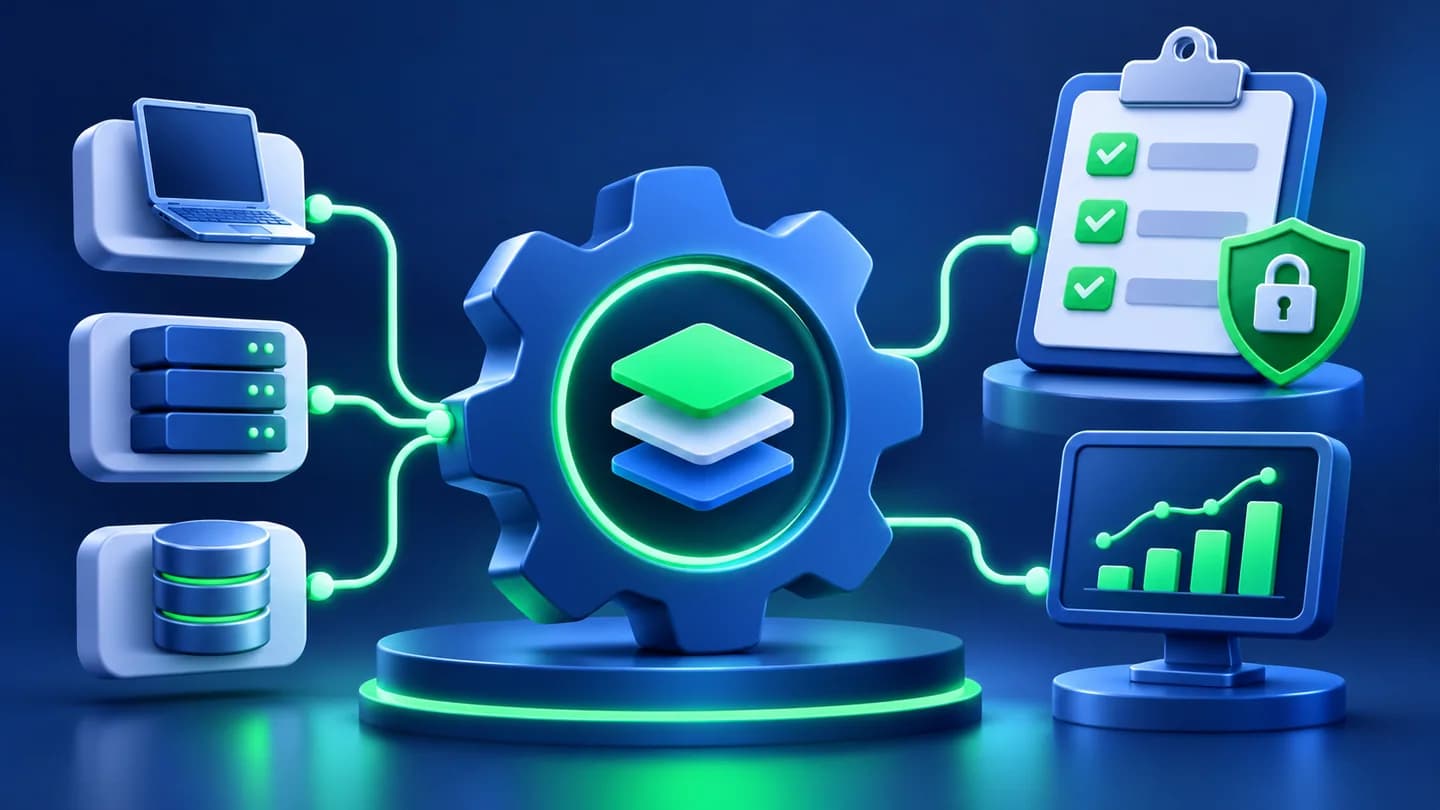
Problems api management software solves
- Each service implements its own authentication, so one has a weak check that nobody noticed.
- A single partner's runaway script floods an endpoint and slows it for everyone.
- Changing a response field breaks integrators because there is no versioning or deprecation notice.
- Partners email for credentials and documentation, which delays onboarding.
- Nobody can say which partner calls which API or how often.
What api management software should do
The capabilities to expect, and to check in any demo — whether you buy, configure or build.
API gateway
Receives all external calls, routes them to the right service, and applies authentication, limits and transformations in one place.
Keys, OAuth and token management
Issues API keys or OAuth 2.0 tokens per consumer with scopes, expiry and instant revocation.
Rate limits and quotas
Caps calls per second and per day by consumer or plan, and returns clear errors when limits are hit.
Versioning and deprecation
Runs multiple API versions side by side and gives consumers dated notice before an old one is retired.
Developer portal
Publishes interactive documentation from an OpenAPI specification, with self-service sign-up, sandbox keys and a place to test calls.
Monitoring and analytics
Tracks latency, error rates and usage per API and per consumer, and alerts on anomalies.
Security policies
Applies IP allow-lists, schema validation, mutual TLS where needed and protection against abusive traffic.
Request and response transformation
Maps formats or headers so legacy backends can be exposed through a clean public interface.
Who uses api management software
How the api management process works
The day-to-day process the software has to support, step by step.
Describe the API
Write or import an OpenAPI specification and decide the public paths and versions.
Publish through the gateway
Register the backend, set authentication, and apply limits and policies.
Onboard consumers
A partner signs up on the portal, receives sandbox credentials and tests against the specification.
Promote to production
After review, production keys are issued with agreed quotas and scopes.
Monitor and support
Teams watch errors and latency, and help consumers diagnose issues from logs.
Version and retire
New versions are released and old ones deprecated with notice.
Integrations to plan for
Systems api management software commonly connects to. Confirm connector availability and any provider fees.
- OpenAPI / Swagger specifications
- OAuth 2.0 / OpenID Connect identity providers
- Kubernetes ingress and service mesh
- Prometheus / Grafana / Datadog
- SIEM and log platforms
- CI/CD pipelines
- Billing systems for usage-based plans
Metrics worth tracking
- Error rate by API and consumer — separates your faults from a partner's integration bugs
- p95 latency per endpoint — shows slowdown before users complain
- Calls versus quota per consumer — supports capacity planning and fair billing
- Active consumers on deprecated versions — tells you when an old version can be retired
- Time from partner sign-up to first successful call — measures onboarding friction
India: compliance and market notes
- CERT-In directions of April 2022 require ICT system logs to be maintained for 180 days and cyber incidents of specified types to be reported within 6 hours, so gateway access logs should be kept and exportable.
- RBI regulated entities and their partners have separate data-localisation and security expectations for payment data, and the applicable circulars should be checked before designing flows that carry payment information.
- APIs that carry personal data are subject to the Digital Personal Data Protection Act, 2023, which makes scoped access and purpose limits relevant to token design.
General information, not legal or tax advice. Confirm how these apply to your business with your adviser.
Off-the-shelf or tailored?
Managed gateways and open-source options such as Kong, Apigee, AWS API Gateway and Tyk cover the common needs and are the right first look. A tailored build or heavy customisation pays off when plans, quotas and partner approval follow your own commercial rules, when you need a branded developer portal tied to your billing, or when compliance demands specific logging. Splicity can configure a gateway and build the portal and approval flow around it.
Pricing
Pricing is quote-based. It depends on the number of users and locations, the modules you need, integrations, data migration, hosting (cloud or your own servers) and the support level you choose. We scope it on a short requirements call and confirm everything in writing before work starts.
How to evaluate api management
Before a demo, write down who owns each step of the workflow above, where today's data comes from and which decisions need approval. Then put these questions to every vendor, including us:
Questions to bring to your demo
- Demonstrate API gateway and keys, OAuth and token management using a sample from our own business, including one exception case.
- Which of these integrations are available as standard, and which need configuration or development: OpenAPI / Swagger specifications, OAuth 2.0 / OpenID Connect identity providers, Kubernetes ingress and service mesh?
- How does your setup handle this requirement: CERT-In directions of April 2022 require ICT system logs to be maintained for 180 days and cyber incidents of specified types to be reported within 6 hours, so gateway access logs should be kept and exportable?
- How will we track error rate by API and consumer, and can we export the underlying data?
- How are existing records imported and checked, and how do we get our data back if we change systems?
Confirm included features, supported platforms, implementation work and commercial terms in your proposal before purchase.
Questions, answered
Do we need API management for a small number of internal services?
Often not. A gateway earns its cost when external consumers, partners or several teams depend on your APIs and you need consistent authentication, limits and versioning. For two internal services, simple authentication may be enough.
API keys or OAuth?
API keys identify an application and suit simple server-to-server cases. OAuth 2.0 adds scoped, expiring tokens and works when acting on behalf of a user. Sensitive or user-data APIs generally call for OAuth.
How do we version without breaking partners?
Keep old versions running for an announced period, add fields rather than change existing ones, and tell consumers through the portal and email. Monitor which consumers still call the old version before retiring it.
What should we log at the gateway?
Consumer identity, endpoint, timestamp, status code, latency and source IP, without storing secrets or full personal data in the logs. Retain the logs according to your legal and security policy.
Ready to grow with API Management
Tell us a little about your needs and our team will follow up to scope a demo and a quote for your setup.
Scope
Discuss your workflow
Demo
Review the fit
Quote
Confirm costs
Plan
Agree next steps
Plan your rollout
Discuss data migration, configuration and team onboarding.
Define requirements
Review access, data handling and recovery expectations.
Agree on support
Confirm support coverage and responsibilities in your proposal.