
File Sharing System software for Indian businesses
A secure file sharing system lets you send large or sensitive files to people outside your organisation with controls on who can open them and for how long. Finance, legal, design and HR teams use it instead of email attachments and personal cloud links. It is about controlled delivery, not about managing the lifecycle of official documents.
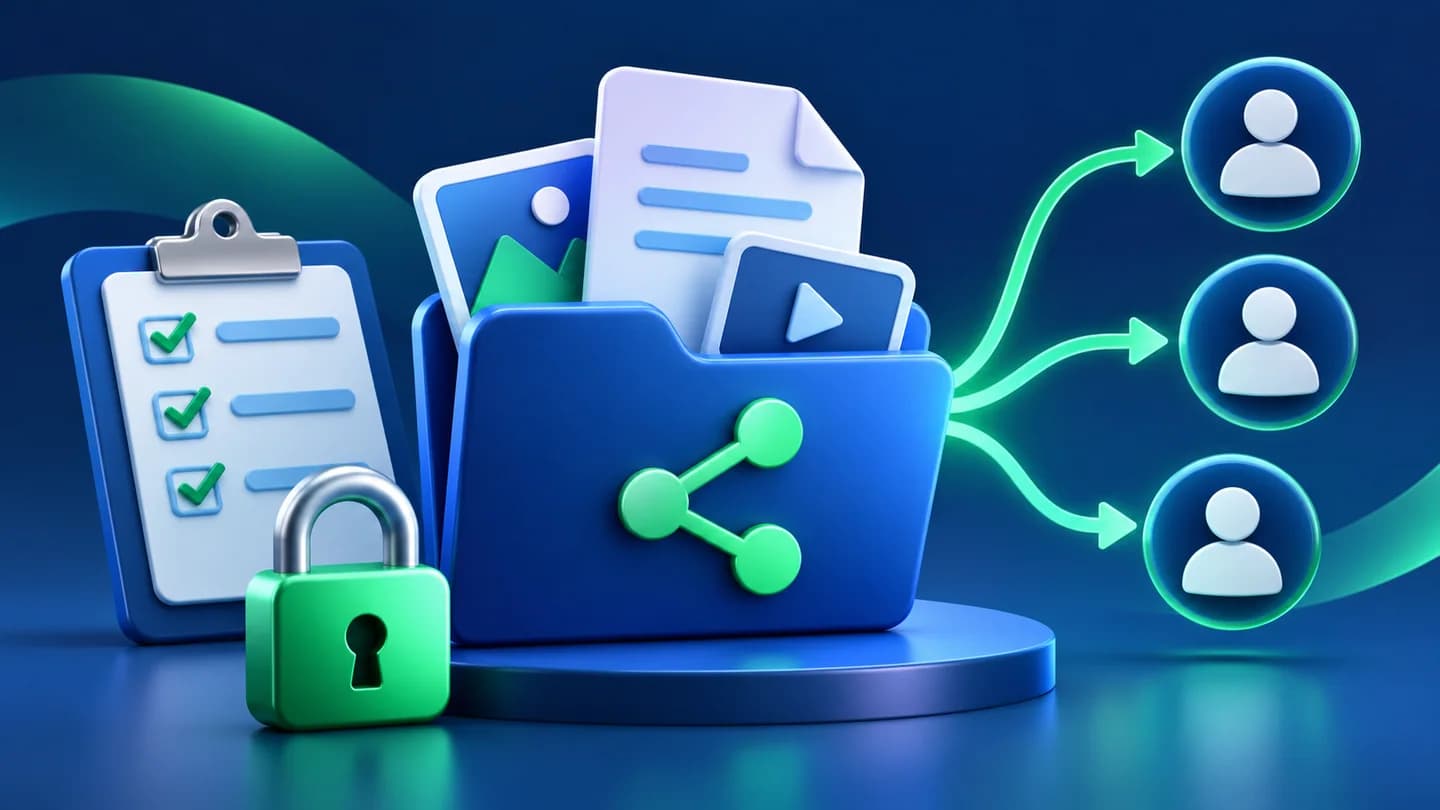
Problems file sharing system software solves
- Files above the email size limit are sent through personal cloud links that the company cannot revoke.
- Confidential documents are sent as attachments and then forwarded without the sender knowing.
- A link shared months ago still works because nobody set an expiry.
- Nobody can say whether the client actually opened or downloaded the file.
What file sharing system software should do
The capabilities to expect, and to check in any demo — whether you buy, configure or build.
Expiring links
Creates links that stop working after a set date or number of uses, and can be revoked at any time by the sender.
Passwords and recipient verification
Protects a link with a password or a one-time code sent to the recipient's email, so a forwarded link is not enough to open the file.
Download and view limits
Limits the number of downloads and offers view-only mode in the browser for sensitive files.
Large file transfer
Uploads large files in resumable chunks, so a broken connection does not restart a multi-gigabyte transfer.
Client portals and request links
Gives clients a branded space to upload files to you, such as KYC documents or bank statements, without needing an account.
Access logs and notifications
Records every open, download and failed attempt with time and IP, and can alert the sender when a file is opened.
Encryption and malware scanning
Encrypts files in transit and at rest and scans uploads for malware before recipients can download them.
Admin policy controls
Lets administrators set default expiry, forbid public links for certain folders and see all active shares.
Who uses file sharing system software
How the file sharing system process works
The day-to-day process the software has to support, step by step.
Upload or request
The sender uploads files, or creates a request link so the other party can upload to a folder.
Set controls
Choose expiry, password or email verification, download limits and view-only options.
Send the link
The recipient receives a link and verifies themselves.
Track access
The sender sees when the file was opened or downloaded and can revoke the link.
Expire and clean up
The link expires, and files are deleted or moved to storage under the retention rule.
Integrations to plan for
Systems file sharing system software commonly connects to. Confirm connector availability and any provider fees.
- Google Drive / OneDrive / SharePoint
- Outlook / Gmail add-in
- SSO via SAML / OpenID Connect
- Antivirus and DLP engines
- S3-compatible object storage
- SIEM log export
- Zapier / webhooks
Metrics worth tracking
- Active links past their expiry policy — shows how much data is exposed unnecessarily
- Files opened by unexpected recipients or locations — an early sign of a leaked link
- Time from share to first open — shows whether clients actually receive and read files
- Share of transfers using verification — tracks adoption of safer defaults
India: compliance and market notes
- CERT-In directions of April 2022 require ICT system logs to be maintained for 180 days and specified cyber incidents to be reported within 6 hours, so access logs from a sharing system should be retained and exportable.
- Under Section 43A of the IT Act, 2000 and its rules, organisations holding sensitive personal data must follow reasonable security practices, which includes controlling how such files leave the company.
- Files containing personal data fall under the Digital Personal Data Protection Act, 2023, so shares to external parties should be limited to a clear purpose.
General information, not legal or tax advice. Confirm how these apply to your business with your adviser.
Off-the-shelf or tailored?
Established services cover ordinary sharing and are the right choice for small volumes with low sensitivity. A tailored build pays off when files must remain in storage you control, when sharing must happen inside your own client portal, or when access logs need to feed your security monitoring. Splicity can build a portal on your own hosting or add policy controls around an existing cloud drive.
Pricing
Pricing is quote-based. It depends on the number of users and locations, the modules you need, integrations, data migration, hosting (cloud or your own servers) and the support level you choose. We scope it on a short requirements call and confirm everything in writing before work starts.
How to evaluate file sharing system
Before a demo, write down who owns each step of the workflow above, where today's data comes from and which decisions need approval. Then put these questions to every vendor, including us:
Questions to bring to your demo
- Demonstrate expiring links and passwords and recipient verification using a sample from our own business, including one exception case.
- Which of these integrations are available as standard, and which need configuration or development: Google Drive / OneDrive / SharePoint, Outlook / Gmail add-in, SSO via SAML / OpenID Connect?
- How does your setup handle this requirement: CERT-In directions of April 2022 require ICT system logs to be maintained for 180 days and specified cyber incidents to be reported within 6 hours, so access logs from a sharing system should be retained and exportable?
- How will we track active links past their expiry policy, and can we export the underlying data?
- How are existing records imported and checked, and how do we get our data back if we change systems?
Confirm included features, supported platforms, implementation work and commercial terms in your proposal before purchase.
Questions, answered
How is this different from document management?
A file sharing system controls delivery to external people. A document management system governs versions, approvals and retention of official documents. A shared file can come from either.
Are expiring links really secure?
Expiry limits exposure but does not prevent forwarding while the link is live. Pair it with a password or email verification and a download limit for sensitive files.
How large a file can be shared?
That depends on storage, bandwidth and upload design rather than on a fixed rule. Ask for resumable chunked upload and test with your largest real file before committing.
Can clients send files to us without an account?
Yes, through request links or upload portals that need only an email check. This is common for collecting KYC and financial documents, and each upload should be scanned and logged.
Ready to grow with File Sharing System
Tell us a little about your needs and our team will follow up to scope a demo and a quote for your setup.
Scope
Discuss your workflow
Demo
Review the fit
Quote
Confirm costs
Plan
Agree next steps
Plan your rollout
Discuss data migration, configuration and team onboarding.
Define requirements
Review access, data handling and recovery expectations.
Agree on support
Confirm support coverage and responsibilities in your proposal.