
Payment Management software for Indian businesses
Payment management software handles the movement of money itself: preparing supplier and payroll-like payouts, approving them, sending them through bank rails and recording incoming collections and gateway settlements. It suits finance teams that pay many suppliers and collect through several channels. Splicity can configure or build approval-controlled payment runs and settlement tracking connected to your bank and ledger.
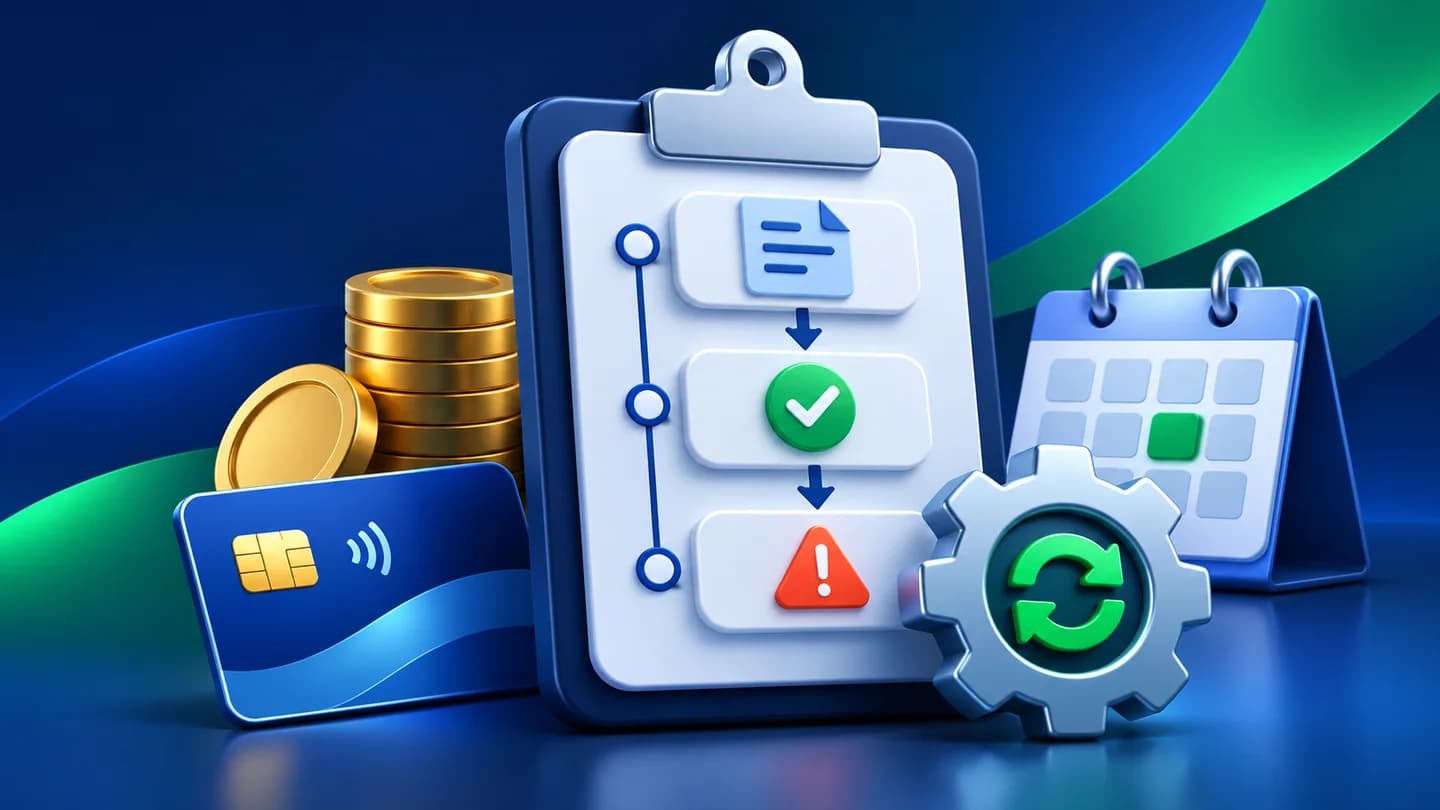
Problems payment management software solves
- Payments are keyed manually into net banking one by one, with a high chance of typing the wrong account or amount.
- Approval is by message, so nobody can show who authorised a specific payout.
- Gateway settlements arrive as lump sums net of fees, and finance cannot tell which orders they cover.
- Failed or returned payments are noticed late, leaving suppliers unpaid and invoices open.
- Payment timing is not planned against due dates, so early payments waste cash and late ones create disputes.
What payment management software should do
The capabilities to expect, and to check in any demo — whether you buy, configure or build.
Payment run preparation
Approved bills due within a chosen window are selected into a batch showing payee, amount, due date and bank details for review.
Multi-level approval
Batches or single payments route to approvers by amount, and the approver's identity and time are recorded.
Bank file generation
A bulk payment file in the bank's format is produced for upload, selecting the rail such as NEFT, RTGS, IMPS or UPI according to amount and urgency.
Payout status and failure handling
Statuses returned by the bank show paid, pending or failed, and failures are re-queued with a reason.
Collections and gateway settlement
Online and UPI receipts are matched to the settlement batches the gateway pays out, separating gross sales, fees and net credited.
Beneficiary verification
New or changed payee accounts are verified before the first payment, which helps catch misdirected or fraudulent transfers.
Payment scheduling
Payments are timed against due dates and discount or penalty terms, so cash goes out when it is owed.
Who uses payment management software
How the payment management process works
The day-to-day process the software has to support, step by step.
Select bills due
Approved supplier bills and other payables falling due are gathered into a proposed run.
Review and approve
Finance checks amounts and payees, and approvers release the batch according to limits.
Send through the bank
A payment file or API call instructs the bank, using the rail suited to the amount.
Track outcomes
Paid, pending and failed items are updated from bank responses, and failures are corrected.
Record and settle incoming money
Gateway and UPI collections are matched to orders and invoices, and the entries go to the ledger.
Integrations to plan for
Systems payment management software commonly connects to. Confirm connector availability and any provider fees.
- Bank bulk payment files and APIs
- Payment gateways (Razorpay, PayU, Cashfree)
- UPI collection providers
- Tally Prime / Zoho Books / Busy
- Purchase management and AP
- Banking reconciliation system
Metrics worth tracking
- Payments released on or before due date — shows reliability to suppliers
- Failed payment rate and time to resolve — shows data quality and operational friction
- Payments awaiting approval and age — shows bottlenecks in sign-off
- Gateway fees as a share of collections — shows the cost of each payment channel
- Unmatched settlement amounts — shows collections not yet tied to orders
India: compliance and market notes
- Common payment rails in India are NEFT, RTGS, IMPS and UPI, each with different limits, timings and costs; the system should choose or let the user choose the right one.
- TDS has to be deducted before paying certain suppliers, so payment runs should show the deduction amount and the net payable.
- Payments to registered micro and small enterprises are subject to time limits under the MSMED Act, and Section 43B(h) of the Income-tax Act links deduction to timely payment, so due dates should be visible in the run.
- Banks offer corporate net banking and API services with their own bulk file formats, which vary by bank.
General information, not legal or tax advice. Confirm how these apply to your business with your adviser.
Off-the-shelf or tailored?
Your bank's corporate portal is enough when you pay a few vendors and approvals are simple. A tailored build pays off when payment runs must come from approved bills with multi-level sign-off, when you operate across several banks or gateways, or when collections need matching to orders. Map your bank file formats and approval limits at the outset.
Pricing
Pricing is quote-based. It depends on the number of users and locations, the modules you need, integrations, data migration, hosting (cloud or your own servers) and the support level you choose. We scope it on a short requirements call and confirm everything in writing before work starts.
How to evaluate payment management
Before a demo, write down who owns each step of the workflow above, where today's data comes from and which decisions need approval. Then put these questions to every vendor, including us:
Questions to bring to your demo
- Demonstrate payment run preparation and multi-level approval using a sample from our own business, including one exception case.
- Which of these integrations are available as standard, and which need configuration or development: Bank bulk payment files and APIs, Payment gateways (Razorpay, PayU, Cashfree), UPI collection providers?
- How does your setup handle this requirement: Common payment rails in India are NEFT, RTGS, IMPS and UPI, each with different limits, timings and costs?
- How will we track payments released on or before due date, and can we export the underlying data?
- How are existing records imported and checked, and how do we get our data back if we change systems?
Confirm included features, supported platforms, implementation work and commercial terms in your proposal before purchase.
Questions, answered
How is this different from banking reconciliation?
Payment management moves money out and in: runs, approvals, payouts and settlements. Banking reconciliation checks afterwards that bank statement lines agree with ledger entries. Payment data makes reconciliation easier.
Which payment rail should we use?
NEFT, RTGS, IMPS and UPI differ in amount limits, timing and charges, and banks apply their own rules. Choose based on amount and urgency, and confirm limits with your bank.
Can approvals be limited by amount?
A payment system should support approval tiers by amount, payee type or category, with an audit trail. Ask whether the approver sees the bill and match status or just a list of names.
How do gateway settlements get matched?
The gateway reports each payout batch with the transactions, fees and refunds it covers. Matching ties those to orders and to the bank credit, so net settlement can be explained.
Ready to grow with Payment Management
Tell us a little about your needs and our team will follow up to scope a demo and a quote for your setup.
Scope
Discuss your workflow
Demo
Review the fit
Quote
Confirm costs
Plan
Agree next steps
Plan your rollout
Discuss data migration, configuration and team onboarding.
Define requirements
Review access, data handling and recovery expectations.
Agree on support
Confirm support coverage and responsibilities in your proposal.