
Learning Management System (LMS) software for Indian businesses
A learning management system (LMS) hosts courses online: structured content, assignments, discussions, grading and progress reports. Schools, colleges, coaching institutes and corporate trainers use it to deliver blended or fully online learning that used to be handled with shared drives and video links. It is distinct from a quiz tool, which only runs tests, and from exam management, which handles formal assessment records.
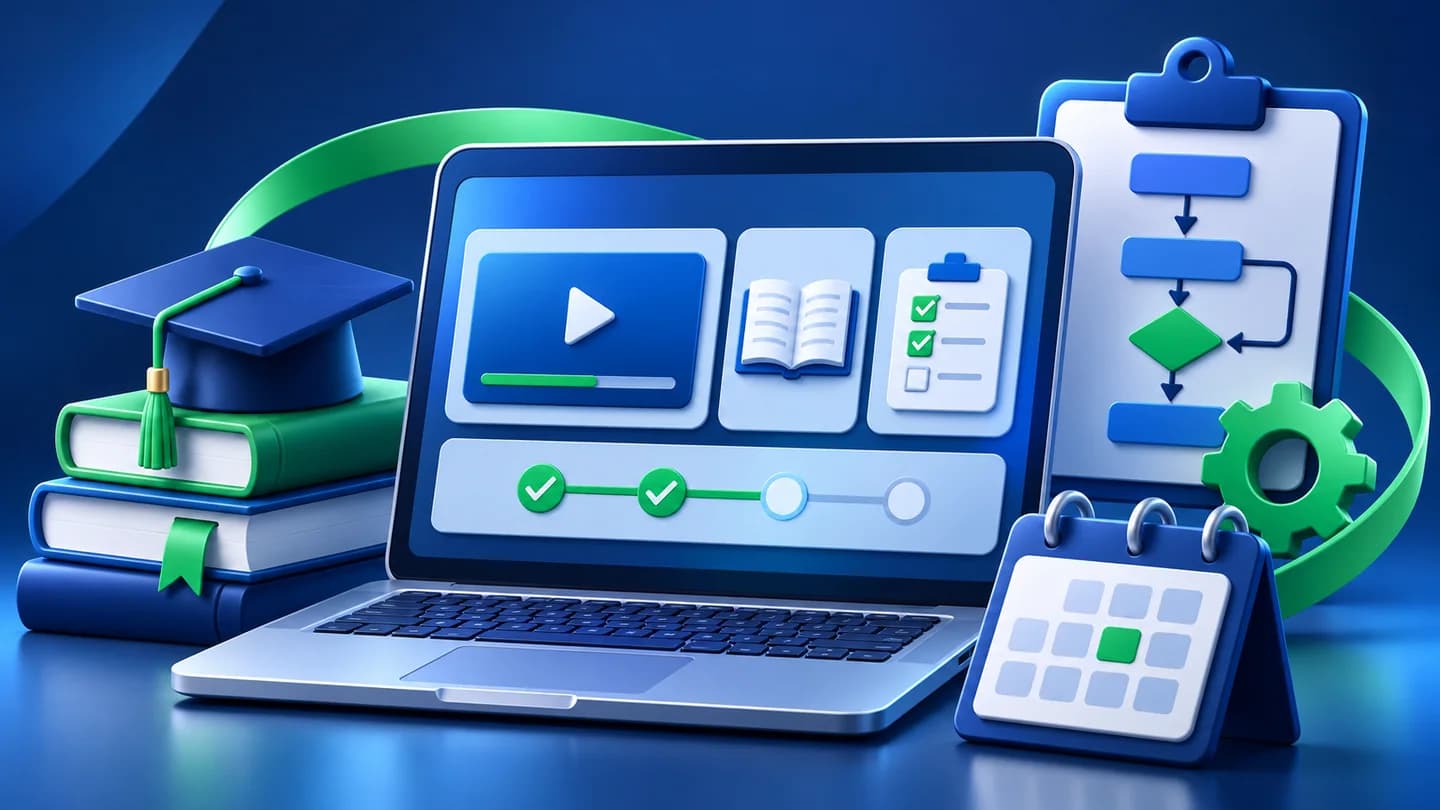
Problems learning management system (lms) software solves
- Notes, recordings and assignments are scattered over WhatsApp, drives and email, and students cannot find the current version.
- Teachers cannot see who has opened the material or finished the work until an exam exposes the gap.
- Assignment collection and grading are manual, with late submissions and plagiarism hard to track.
- Certificates for training programmes are issued by hand and are easy to forge or lose.
- Learners on weak connections cannot reliably stream long videos.
What learning management system (lms) software should do
The capabilities to expect, and to check in any demo — whether you buy, configure or build.
Course and content authoring
Structures courses into units and lessons with documents, video, links and SCORM or similar packages. Content can be released on a schedule or after a prerequisite.
Enrolment and cohorts
Enrols learners individually, by class or from a spreadsheet, and groups them into batches with their own deadlines.
Assignments and grading
Collects submissions with deadlines and late rules, supports rubrics and feedback comments, and records grades against the learner.
Live class integration
Schedules and launches live sessions through video tools and links the recording back to the course page.
Discussion and announcements
Provides course forums and notices with moderation, so questions and answers remain with the course rather than in private chats.
Progress tracking and reports
Shows completion, time spent, grades and last access per learner and per cohort so teachers can intervene early.
Certification
Issues certificates on completion rules the institution sets, with a verification code or link to check authenticity.
Offline and low-bandwidth delivery
Offers downloadable material and lower-resolution video so learners with patchy data can still participate.
Who uses learning management system (lms) software
How the learning management system (lms) process works
The day-to-day process the software has to support, step by step.
Design and build the course
Faculty outline units, upload material and set completion rules.
Enrol learners
Administrators add students or cohorts, often synced from the student information system.
Deliver and discuss
Content is released on schedule, live sessions are held and questions are handled in the course forum.
Collect and grade work
Assignments are submitted, graded with rubrics and returned with comments.
Review progress and certify
Teachers use progress reports to support learners, and certificates are issued to those who meet the criteria.
Integrations to plan for
Systems learning management system (lms) software commonly connects to. Confirm connector availability and any provider fees.
- Google Classroom / Zoom
- Microsoft Teams and Google Meet
- Single sign-on with the student information system
- SCORM and xAPI content packages
- Payment gateways (Razorpay / PayU) for paid courses
- Plagiarism checking tools
- WhatsApp Business API and email for reminders
Metrics worth tracking
- Course completion rate by cohort — shows whether the material and pacing work
- Assignment on-time submission rate — shows engagement and workload fit
- Learners inactive for 7 days — gives teachers a list to follow up
- Average time to grade — shows how quickly feedback reaches students
- Certificate verification checks — indicates use and trust in the credential
India: compliance and market notes
- SWAYAM is the national platform for online courses, and higher education institutions can offer or recognise credit-bearing online courses within the limits set by UGC rules; check the current regulation before promising credit transfer.
- Academic Bank of Credits allows credits to be stored for higher education; an LMS used for credit courses should export completion and grade data in the form the university needs.
- Learners under 18 are children under the Digital Personal Data Protection Act, 2023, so verifiable parental consent is needed before processing their data, and behavioural tracking or targeted advertising to children is restricted.
- Bandwidth varies widely across India, so mobile-first design and low-bitrate video are practical requirements, not extras.
General information, not legal or tax advice. Confirm how these apply to your business with your adviser.
Off-the-shelf or tailored?
Open-source or hosted LMS products are enough for a school or college that needs standard courses, assignments and grading. A tailored build pays off when the LMS must tie closely to your student records, issue verifiable certificates, support regional languages, run paid cohorts, or follow a distinctive pedagogy. Splicity can configure or extend an existing platform or build one focused on your workflow.
Pricing
Pricing is quote-based. It depends on the number of users and locations, the modules you need, integrations, data migration, hosting (cloud or your own servers) and the support level you choose. We scope it on a short requirements call and confirm everything in writing before work starts.
How to evaluate learning management system (lms)
Before a demo, write down who owns each step of the workflow above, where today's data comes from and which decisions need approval. Then put these questions to every vendor, including us:
Questions to bring to your demo
- Demonstrate course and content authoring and enrolment and cohorts using a sample from our own business, including one exception case.
- Which of these integrations are available as standard, and which need configuration or development: Google Classroom / Zoom, Microsoft Teams and Google Meet, Single sign-on with the student information system?
- How does your setup handle this requirement: SWAYAM is the national platform for online courses, and higher education institutions can offer or recognise credit-bearing online courses within the limits set by UGC rules?
- How will we track course completion rate by cohort, and can we export the underlying data?
- How are existing records imported and checked, and how do we get our data back if we change systems?
Confirm included features, supported platforms, implementation work and commercial terms in your proposal before purchase.
Questions, answered
Should we use an open-source LMS or build our own?
For standard courses, an established open-source or hosted LMS is usually the lower-risk route. Building makes sense when integration, branding, learner experience or certification needs are specific enough that customisation would cost as much.
Does an LMS replace Google Classroom?
It covers similar ground with more structure for courses, progress reporting and certification. Some institutions keep Google Classroom for daily class work and use an LMS for formal programmes.
How are recordings and large files hosted?
Video is normally stored on a streaming service or CDN rather than the application server, so playback adapts to bandwidth. Ask where content is stored and how long it is retained.
Can certificates be verified later?
Yes, a certificate can carry a unique code and a verification page. The institution should decide the issuing rules and retain the records for the period it considers necessary.
Ready to grow with Learning Management System (LMS)
Tell us a little about your needs and our team will follow up to scope a demo and a quote for your setup.
Scope
Discuss your workflow
Demo
Review the fit
Quote
Confirm costs
Plan
Agree next steps
Plan your rollout
Discuss data migration, configuration and team onboarding.
Define requirements
Review access, data handling and recovery expectations.
Agree on support
Confirm support coverage and responsibilities in your proposal.