
Build a Service Marketplace That Works Around the Clock
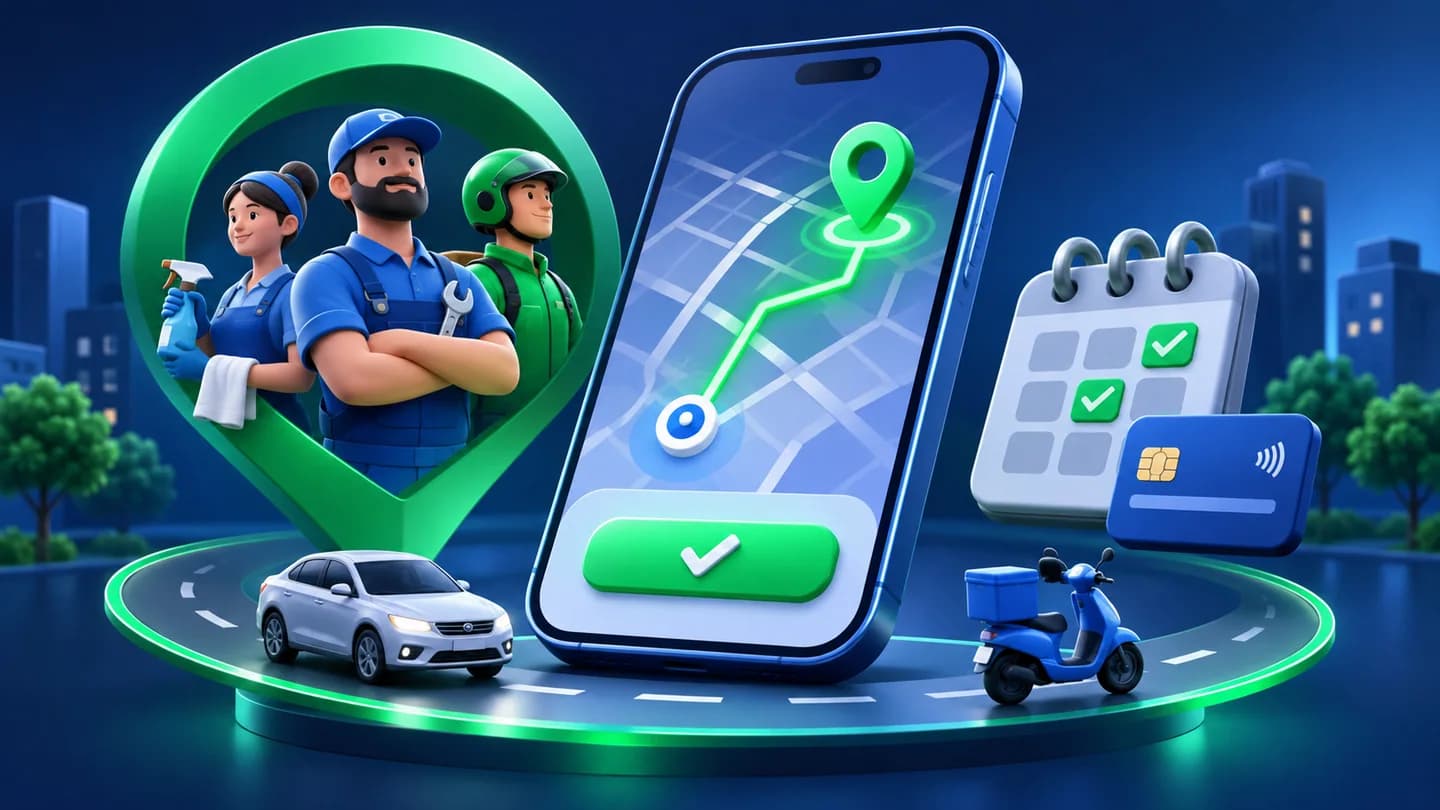
Splicity Dynamics designs and engineers on-demand platforms that match customers with service providers instantly, handling booking, dispatch, and payment in one seamless flow. Clients launch faster, reduce operational friction, and capture revenue from every completed job.
 E-Commerce
Matching rules that are yours
How providers are ranked and offered jobs is encoded in logic you control, so you can favour quality, proximity or fairness of distribution as your market demands.
One platform, several service types
Services, forms, pricing models and required provider credentials are configurable, so a new category is configuration plus testing instead of a new app.
Both sides of the marketplace under one roof
Customer and provider onboarding, verification, payouts and disputes are part of one system rather than stitched together from tools.
On-Demand App Development
The outcome we're after
On-demand products connect a customer who needs something done with a provider who can do it, whether that is a home repair, a salon visit, a tutor or a vehicle. The hard part is not the booking form. It is deciding who gets offered a job, what happens when they decline, how time and price are fixed, and who is liable when the job goes wrong.
We start by defining your marketplace model: instant dispatch versus scheduled slots, fixed-price versus quote-based, providers who are employees versus independent. From that we design a job lifecycle and a matching engine that scores providers by skill, distance, availability and past performance. The customer app, provider app and operations dashboard are then built around that lifecycle, with payments held and released according to your rules.
At the end you own the matching logic, the apps, the admin tools and the data on both sides of the marketplace. Because the service category is a configuration of the platform rather than hard-coded, adding a second vertical later does not mean starting again.
What we deliver
Key offerings
Scope
What a custom on-demand app development build includes
Service catalogue and booking flow
Configurable services with question forms, add-ons, instant or scheduled booking, and address or location capture.
Provider onboarding and verification
Profile, document upload, skill tags, service areas and an approval queue for your operations team.
Matching and dispatch engine
Candidate scoring, sequential or broadcast offers with timeouts, reassignment on decline, and fairness rules.
Job execution tracking
Status updates, live location where relevant, start and completion proof such as OTP or photos, and in-app chat with number masking.
Payments and payouts
Pre-authorisation or prepayment, cancellation fees, commission calculation and scheduled provider settlements.
Ratings, disputes and support
Two-way ratings, issue reporting with evidence, refund workflows and agent tools to resolve cases.
Operations dashboard
Live job board, provider availability map, manual assignment, pricing and zone controls, and exportable reports.
Engineering
Architecture and technology
We separate the marketplace into a catalogue and pricing service, a job lifecycle service and a matching service, usually as modules in one deployable backend so they can be split later if scale demands. Matching consumes a stream of provider availability and location updates held in Redis, while jobs and payments live in PostgreSQL with an event log for audit. Offers are time-bound and idempotent so a provider cannot accept a job that has already been reassigned. Number masking and chat go through a telephony or messaging provider rather than being built from scratch.
Typical stack
- React Native or Flutter
- Node.js (NestJS)
- PostgreSQL
- Redis
- WebSockets
- Firebase Cloud Messaging
- Google Maps Platform
- Next.js (ops dashboard)
Delivery
How we deliver it
- 01
Marketplace model workshop
We settle instant versus scheduled work, pricing method, commission, cancellation rules and the credentials providers must hold.
- 02
Lifecycle and matching prototype
The job state machine and matching rules are prototyped with sample providers so the rules can be challenged before apps are built.
- 03
Apps and dashboard build
Customer app, provider app and operations dashboard are built against one API, with each iteration demonstrated on real devices.
- 04
Payments and trust features
Gateway integration, payout logic, ratings, masked calling and dispute tools are added and tested end to end.
- 05
Supply-first pilot
A small provider pool and a single area go live first, so matching and payouts can be adjusted on real jobs before expansion.
Planning
What drives cost and timeline
- Instant dispatch with live location versus scheduled bookings only.
- Fixed price, quote-based and hourly pricing models in the same product.
- Depth of provider verification and document workflows.
- Number of service categories and how different their booking forms are.
- Payout complexity, including commissions, taxes and partial refunds.
- Languages and regions supported from launch.
India: compliance and market notes
- Marketplaces that sell to consumers fall under the Consumer Protection (E-Commerce) Rules 2020, which cover grievance handling and seller information.
- Collecting payment on behalf of providers should go through an RBI-authorised payment aggregator with split settlement, not through your own bank account.
- Customer addresses, phone numbers and live location are personal data under the DPDP Act 2023.
- SMS to customers and providers must use DLT-registered senders and templates, and WhatsApp messages need opt-in and approved templates.
General information, not legal or tax advice.
Comparing ready-made options first? Read our guide to logistics management software.
Why Splicity
Why teams choose us for this
A senior team, a fixed plan and long-term ownership — the things that decide whether a project actually succeeds.
One accountable team
Strategy, design, build and support handled end to end by senior people — not handed off and lost.
Fixed, transparent scope
A clear plan and estimate before any work begins. No open-ended billing, no surprises.
Built to scale & rank
Performance, security and SEO engineered in from day one — not bolted on at the end.
A long-term partner
We support, monitor and evolve what we build, so it keeps delivering value long after launch.
FAQ
Frequently asked questions
Is this the same as a food delivery build?
No. Food delivery is built around menus, kitchens and riders. An on-demand platform is a general marketplace where the service, price and provider requirements are configurable, and matching is based on skills and availability.
Who owns the code and the provider network data?
You do. Source code and database are transferred at handover and run in your cloud account.
Can we start with one service in one city?
Yes, and we recommend it. The platform is designed so extra services and areas are added by configuration, which keeps the first release smaller.
When would a ready-made marketplace script be enough?
If your model is standard and you are testing demand, a configurable script can be a sensible first step. Custom engineering is worthwhile when matching, pricing or compliance rules differ from the template.
How we build it
Related projects & blueprints
E-Commerce · Solution blueprint
Headless Commerce Replatform
How we move a slow, plugin-heavy online store to a headless architecture — a fast storefront on a modern commerce engine — while protecting existing search rankings, payment flows and operations.
Read the blueprint →
More in E-Commerce & Business Solutions
Related services

Hotel & Travel Booking Platform
Splicity designs and develops hotel and travel booking platforms that handle reservations, itineraries, and payments in one unified system. Clients launch faster, reduce manual work, and give travellers a seamless booking experience from search to checkout.
Explore→
Auction Platform Development
We design and develop custom online auction systems — from live bidding engines to sealed-tender portals — tailored to your inventory, buyer base, and business rules. Clients get a production-ready platform that handles concurrency, fraud controls, and payment settlement without compromise.
Explore→
Job Portal Development
Splicity Dynamics designs and develops custom job portals that connect employers with qualified candidates through intelligent matching and streamlined application workflows. The result is a platform your hiring teams actually want to use — and one that keeps job seekers coming back.
Explore→
Event Management Platform
We build custom event management platforms that handle ticketing, attendee registration, and live or virtual sessions in one unified system. Organizers get fewer manual tasks, cleaner data, and events that actually run on schedule.
Explore→
Fleet Management System
Splicity designs and builds fleet management platforms that connect GPS hardware, driver data, and route intelligence into one operational command centre. The result is lower operating costs, fewer compliance gaps, and a logistics team that can act on live information instead of guesswork.
Explore→
Accounting & Invoicing Software
Splicity designs and develops accounting and invoicing software that handles GST compliance, invoice generation, and financial reporting in one place. Clients spend less time on paperwork and more time on the work that actually grows their business.
Explore→Ready to start your on-demand app development project?
Tell us what you're building. We'll scope it and come back with a clear plan, timeline and estimate.