
Inventory Management software for Indian businesses
Inventory management software keeps one reliable record of how much of each item you hold, where it sits and what it is worth. It is used by traders, distributors, manufacturers and retailers who have outgrown stock registers and spreadsheets that drift away from the physical count. Splicity can configure or build an inventory system around your item master, locations and valuation method.
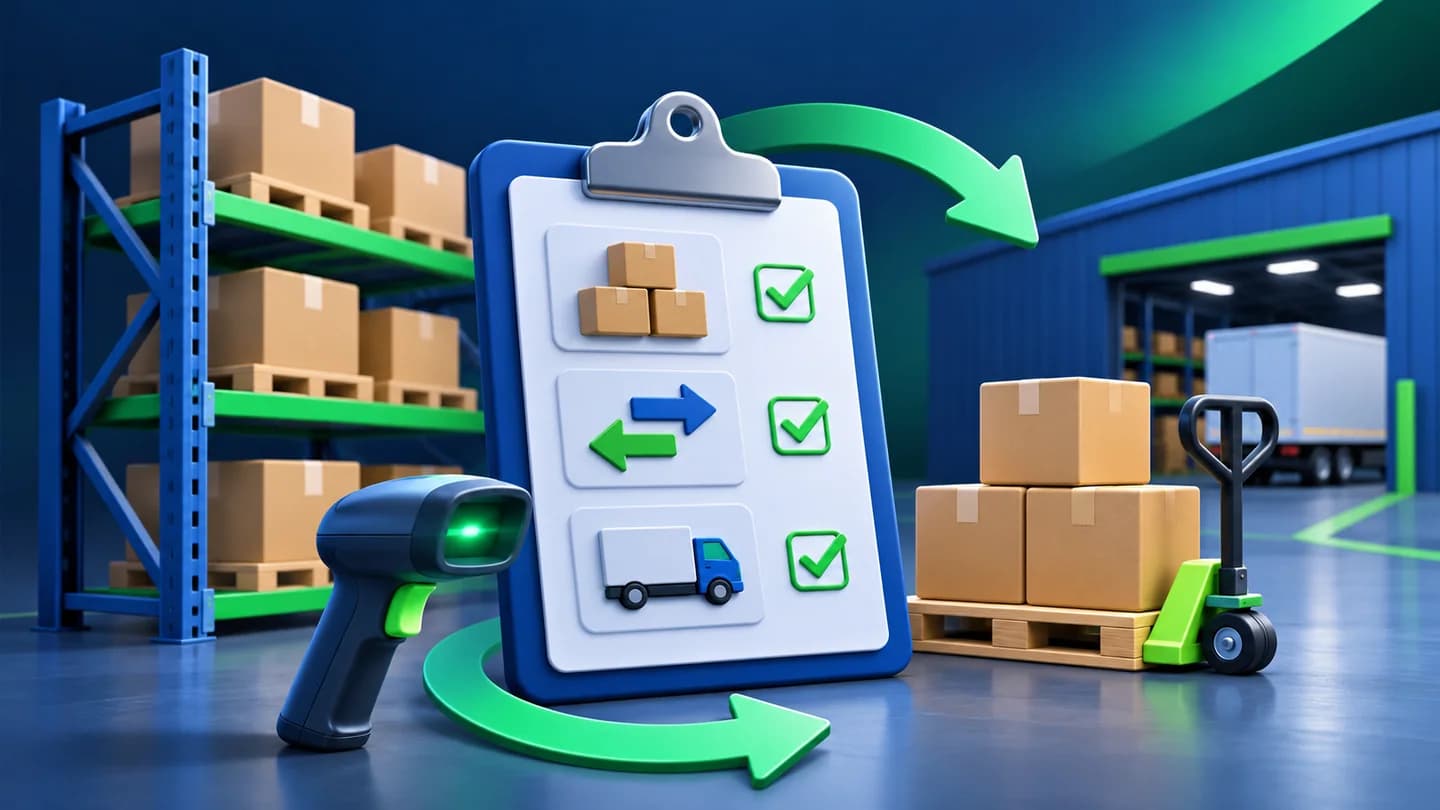
Problems inventory management software solves
- Book stock and physical stock disagree, and nobody can say which transaction caused the gap.
- Reorder decisions rely on memory, so fast-moving items run out while slow ones pile up.
- Batch-controlled items such as medicines or food are sold close to expiry because dates are not tracked per lot.
- Closing stock value for the balance sheet is assembled manually at year end and is hard to defend to an auditor.
- Stock sitting in several locations or in transit between them is invisible to sales staff taking orders.
What inventory management software should do
The capabilities to expect, and to check in any demo — whether you buy, configure or build.
Item master and units of measure
Each item carries a code, category, HSN code, base unit and conversion units such as box to piece, so the same stock can be bought in cartons and sold loose without manual arithmetic.
Multi-location stock ledger
Every receipt, issue and transfer posts a movement against a location, giving a running quantity per godown, store or in-transit bucket instead of one company-wide number.
Batch, lot and expiry tracking
Quantities are held per batch with manufacturing and expiry dates, and issues can follow first-expiry-first-out so older lots leave before newer ones.
Valuation methods
The system should value stock on a declared basis such as weighted average or FIFO and apply it consistently, so closing stock ties to the ledger the accountant uses.
Reorder levels and replenishment alerts
Minimum, maximum and lead-time settings per item and location raise a shortlist of what to reorder, which can feed a purchase requisition.
Physical count and adjustments
Cycle counts or full counts are recorded against system quantity, differences are listed for approval, and adjustments carry a reason code and an approver.
Stock transfers between locations
A transfer is a two-step event, dispatched and then received, so goods in transit remain visible and shortages on arrival are caught.
Who uses inventory management software
How the inventory management process works
The day-to-day process the software has to support, step by step.
Define items, units and locations
Load the item master with codes, units, HSN codes, valuation method and the list of locations that hold stock.
Post receipts against purchases or production
Incoming goods are booked to a location, with batch and expiry captured where the item requires it.
Issue stock on sales, consumption or transfer
Each outward movement reduces the right batch and location, so availability shown to sales is current.
Review reorder suggestions
Items below their minimum level are listed with usual lead time, and the buyer decides what to raise as a requisition or order.
Count, reconcile and adjust
Physical counts are compared with system quantity, differences are investigated and approved adjustments are posted with a reason.
Integrations to plan for
Systems inventory management software commonly connects to. Confirm connector availability and any provider fees.
- Tally Prime / Zoho Books / Busy
- Barcode / QR scanners and label printers
- Sales and POS systems
- E-commerce marketplace order feeds
- GST e-way bill portal via GSP
- Excel / CSV item and opening-stock import
Metrics worth tracking
- Stock accuracy against physical count — shows whether the ledger can be trusted for sales and audit
- Stock-out incidents on active items — shows lost orders caused by late reordering
- Days of stock on hand by category — separates over-stocked lines from tight ones
- Slow-moving and non-moving stock value — shows cash locked in items that are not selling
- Near-expiry stock value — shows how much batch-controlled stock is at risk of write-off
India: compliance and market notes
- Items should carry the correct HSN code so that sales invoices and GST returns pick up the right classification.
- Goods moving between your own branches or godowns in different states are treated as supplies for GST, so transfer documents must be handled with the right tax treatment.
- Movement of goods above the notified value generally needs an e-way bill, so dispatch data from the stock system should be able to feed e-way bill generation.
General information, not legal or tax advice. Confirm how these apply to your business with your adviser.
Off-the-shelf or tailored?
Packaged inventory tools are usually enough when you have one or two locations, a simple item list and standard weighted-average valuation. A tailored build pays off when you hold stock across many locations, need batch and expiry rules specific to your trade, convert units in unusual ways, or must tie stock movements to your own order and production flow. Start by mapping how stock actually moves and where counts currently go wrong.
Pricing
Pricing is quote-based. It depends on the number of users and locations, the modules you need, integrations, data migration, hosting (cloud or your own servers) and the support level you choose. We scope it on a short requirements call and confirm everything in writing before work starts.
How to evaluate inventory management
Before a demo, write down who owns each step of the workflow above, where today's data comes from and which decisions need approval. Then put these questions to every vendor, including us:
Questions to bring to your demo
- Demonstrate item master and units of measure and multi-location stock ledger using a sample from our own business, including one exception case.
- Which of these integrations are available as standard, and which need configuration or development: Tally Prime / Zoho Books / Busy, Barcode / QR scanners and label printers, Sales and POS systems?
- How does your setup handle this requirement: Items should carry the correct HSN code so that sales invoices and GST returns pick up the right classification?
- How will we track stock accuracy against physical count, and can we export the underlying data?
- How are existing records imported and checked, and how do we get our data back if we change systems?
Confirm included features, supported platforms, implementation work and commercial terms in your proposal before purchase.
Questions, answered
What is the difference between inventory management and warehouse management?
Inventory management answers how much of each item you have, where and what it is worth. Warehouse management covers the physical work inside a warehouse such as putaway, bin locations and picking. Small businesses often need only the first; large single-site warehouses usually need both.
Can one system handle several godowns and stores?
It should keep a separate quantity per location and treat transfers as dispatch-and-receive events. Ask how in-transit stock is shown and whether users can be limited to the locations they manage.
Which valuation method should we use?
Weighted average and FIFO are the common choices, and the right one depends on your accounting policy and what your auditor accepts. Pick one, apply it consistently and make sure the system and your accounting ledger use the same basis.
Does the stock system replace our accounting software?
Usually not. It holds quantities and movements, then passes purchase, sales and valuation entries to Tally, Zoho Books or Busy. Confirm which system is the source of truth for closing stock before you start.
Ready to grow with Inventory Management
Tell us a little about your needs and our team will follow up to scope a demo and a quote for your setup.
Scope
Discuss your workflow
Demo
Review the fit
Quote
Confirm costs
Plan
Agree next steps
Plan your rollout
Discuss data migration, configuration and team onboarding.
Define requirements
Review access, data handling and recovery expectations.
Agree on support
Confirm support coverage and responsibilities in your proposal.