
Build an Online School That Scales With Your Students
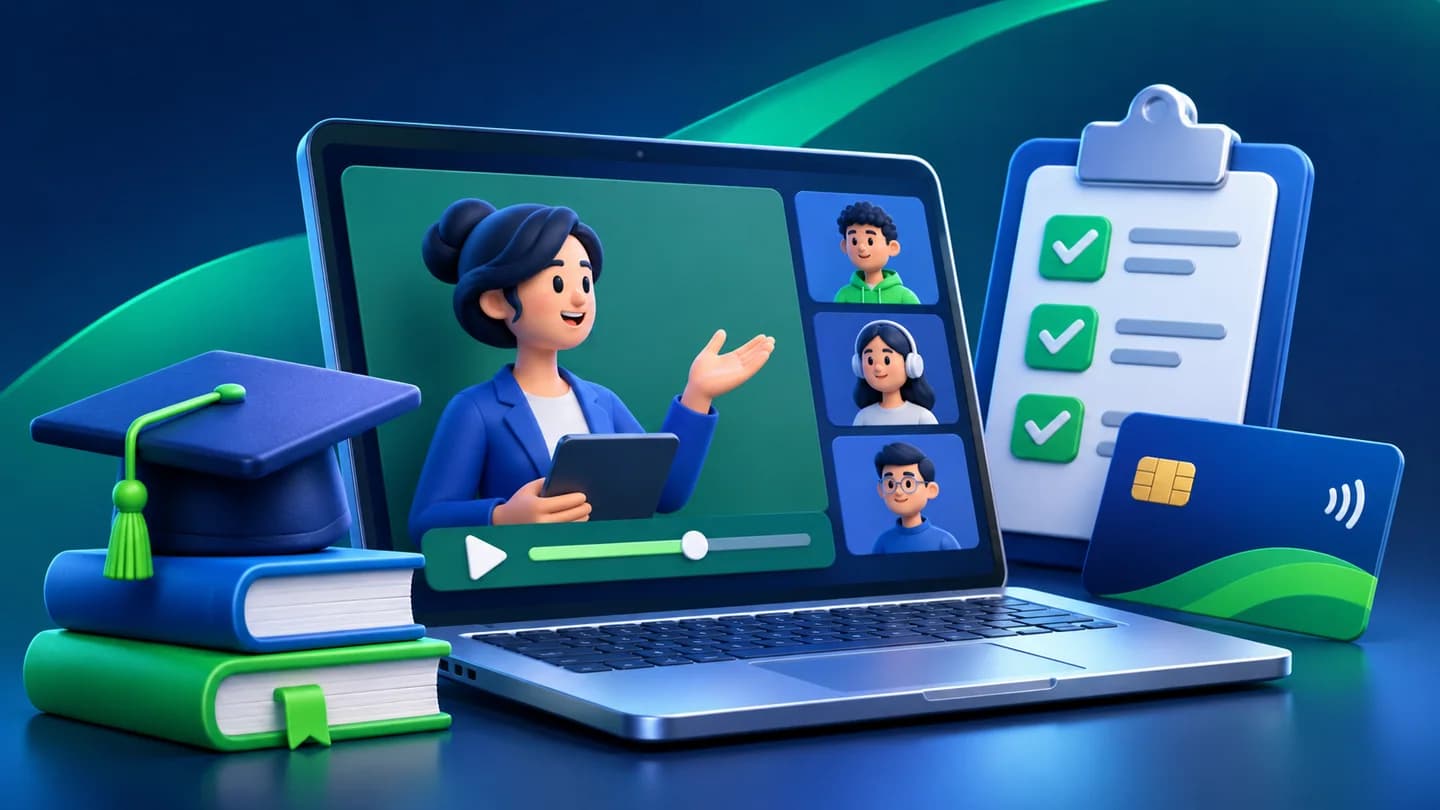
We design and develop full-featured EdTech platforms — online schools, tutoring marketplaces, and learning management systems — tailored to how your educators teach and your learners engage. Clients launch faster, retain more students, and reduce admin overhead from day one.
 E-Commerce
Assessment that fits your syllabus
Question types, marking schemes, negative marking, sections and timers follow your exams rather than a fixed quiz tool.
Built for modest devices and networks
Adaptive video streaming, resumable downloads and tests that save progress locally suit learners on entry-level phones.
Insight for teachers and parents
Progress by topic, time spent and attempt history are shown in views designed for each role, not one generic dashboard.
EdTech Platform Development
The outcome we're after
An education product is judged by whether learners return, and that depends on the details: video that plays on a weak connection, a test that does not lose answers when the network drops, a parent who can see progress without calling the school. Generic course platforms rarely accommodate the way a particular institution teaches and assesses.
We design the build around your pedagogy. We map how content is structured, whether it is self-paced courses, cohort-based live classes, or exam practice, and how learners are assessed and graded. We then build content delivery, live class integration, a question bank and assessment engine, progress analytics and role-based access for learners, teachers, parents and administrators. Mobile apps are built for low-end Android devices first, with downloads for offline study where content rights allow.
You own the platform, the question bank, the learner data and the learning analytics. Content protection, payments and enrolment rules are yours to configure, so a change in your business model does not depend on a vendor roadmap.
What we deliver
Key offerings
Scope
What a custom edtech platform development build includes
Course and content management
Courses, modules, lessons, video, documents and live sessions, with drip release, prerequisites and versioning.
Video delivery and protection
Adaptive streaming with multiple qualities, signed URLs and optional DRM or watermarking, chosen according to your content-rights needs.
Live class integration
Scheduling, join links, attendance capture and recording import, using a video provider SDK or a meeting service you already use.
Question bank and test engine
Tagged questions in several formats, randomised papers, timed sections, auto-save and automatic plus manual grading.
Progress and analytics
Topic-level strengths and weaknesses, attendance and engagement, and cohort comparisons for teachers.
Enrolment, fees and access control
Plans, coupons, installment schedules and access that begins and ends with enrolment status.
Role portals and notifications
Learner, teacher, parent and admin experiences with notifications over push, SMS and WhatsApp.
Engineering
Architecture and technology
We separate content storage, the learning data model and the assessment engine. Video is transcoded to HLS renditions and served from a CDN with short-lived signed URLs. The test engine writes each answer to the server as it is given, with a local queue to cover disconnections, and computes results from stored responses so a crashed client never loses a paper. Learning events such as video progress and attempts are captured as an event stream for analytics without slowing the main database. Multi-institution products use tenant-scoped data from the start, while a single school can run single-tenant.
Typical stack
- React Native or Flutter
- Next.js
- Node.js
- PostgreSQL
- Redis
- HLS with a CDN
- FFmpeg
- Zoom, Jitsi or similar video SDK
Delivery
How we deliver it
- 01
Learning model definition
We fix how content is structured, how learners progress and are assessed, and who the different user roles are.
- 02
Content and assessment core
Course structure, video delivery and the test engine are built first and tested with real question papers.
- 03
Apps and role portals
Learner and teacher apps and the admin console are built, with testing on low-end Android devices and slow networks.
- 04
Live classes, payments and analytics
Live session integration, enrolment and fee handling and progress dashboards are added.
- 05
Pilot batch and refinement
One cohort uses the platform, and content flows, test behaviour and reports are adjusted from their feedback before wider launch.
Planning
What drives cost and timeline
- Self-paced courses versus live cohort delivery, and the video infrastructure each needs.
- Content protection level, from signed URLs to licensed DRM.
- Assessment complexity, including proctoring features and subjective grading.
- Number of institutions or branches sharing the platform.
- Native mobile apps for Android and iOS versus a responsive web app.
- Integration with existing student information, fee or timetable systems.
India: compliance and market notes
- Platforms that process children's data should treat it carefully under the DPDP Act 2023, which sets specific obligations including verifiable parental consent.
- Indian-language content and interfaces need Unicode support and suitable fonts for scripts such as Devanagari, and question text with mixed scripts must render correctly in tests.
- SMS and WhatsApp notifications to students and parents must use DLT-registered templates and WhatsApp opt-in.
General information, not legal or tax advice.
Comparing ready-made options first? Read our guide to learning management system (lms).
Why Splicity
Why teams choose us for this
A senior team, a fixed plan and long-term ownership — the things that decide whether a project actually succeeds.
One accountable team
Strategy, design, build and support handled end to end by senior people — not handed off and lost.
Fixed, transparent scope
A clear plan and estimate before any work begins. No open-ended billing, no surprises.
Built to scale & rank
Performance, security and SEO engineered in from day one — not bolted on at the end.
A long-term partner
We support, monitor and evolve what we build, so it keeps delivering value long after launch.
FAQ
Frequently asked questions
Do we own the source code and the learner data?
Yes. Code, database and content storage are in your accounts and yours at handover.
Can the platform support online proctored exams?
It can include basic measures such as timers, tab-switch detection and camera snapshots. Strong proctoring is a larger scope with privacy considerations, and we would discuss it separately.
Can we connect it to our school management system?
If that system has an API or exports, student and class data can be synced so learners are not entered twice.
Should we use an existing LMS instead?
For standard courses and quizzes, an existing LMS is often the practical choice. A custom build is worth it when your assessment, content protection or business model do not fit one, or when the platform is itself your product.
How we build it
Related projects & blueprints
E-Commerce · Solution blueprint
Headless Commerce Replatform
How we move a slow, plugin-heavy online store to a headless architecture — a fast storefront on a modern commerce engine — while protecting existing search rankings, payment flows and operations.
Read the blueprint →
More in E-Commerce & Business Solutions
Related services

FinTech App Development
Splicity designs and engineers digital banking platforms and payment wallets that handle real transaction volumes securely. Clients launch faster, reduce fraud exposure, and build lasting user trust.
Explore→
Food Delivery App Development
We design and build end-to-end food delivery platforms, from menu browsing and cart checkout to real-time driver tracking. Restaurants launch faster, reduce missed orders, and retain more customers through a seamless digital experience.
Explore→
On-Demand App Development
Splicity Dynamics designs and engineers on-demand platforms that match customers with service providers instantly, handling booking, dispatch, and payment in one seamless flow. Clients launch faster, reduce operational friction, and capture revenue from every completed job.
Explore→
Hotel & Travel Booking Platform
Splicity designs and develops hotel and travel booking platforms that handle reservations, itineraries, and payments in one unified system. Clients launch faster, reduce manual work, and give travellers a seamless booking experience from search to checkout.
Explore→
Auction Platform Development
We design and develop custom online auction systems — from live bidding engines to sealed-tender portals — tailored to your inventory, buyer base, and business rules. Clients get a production-ready platform that handles concurrency, fraud controls, and payment settlement without compromise.
Explore→
Job Portal Development
Splicity Dynamics designs and develops custom job portals that connect employers with qualified candidates through intelligent matching and streamlined application workflows. The result is a platform your hiring teams actually want to use — and one that keeps job seekers coming back.
Explore→Ready to start your edtech platform development project?
Tell us what you're building. We'll scope it and come back with a clear plan, timeline and estimate.