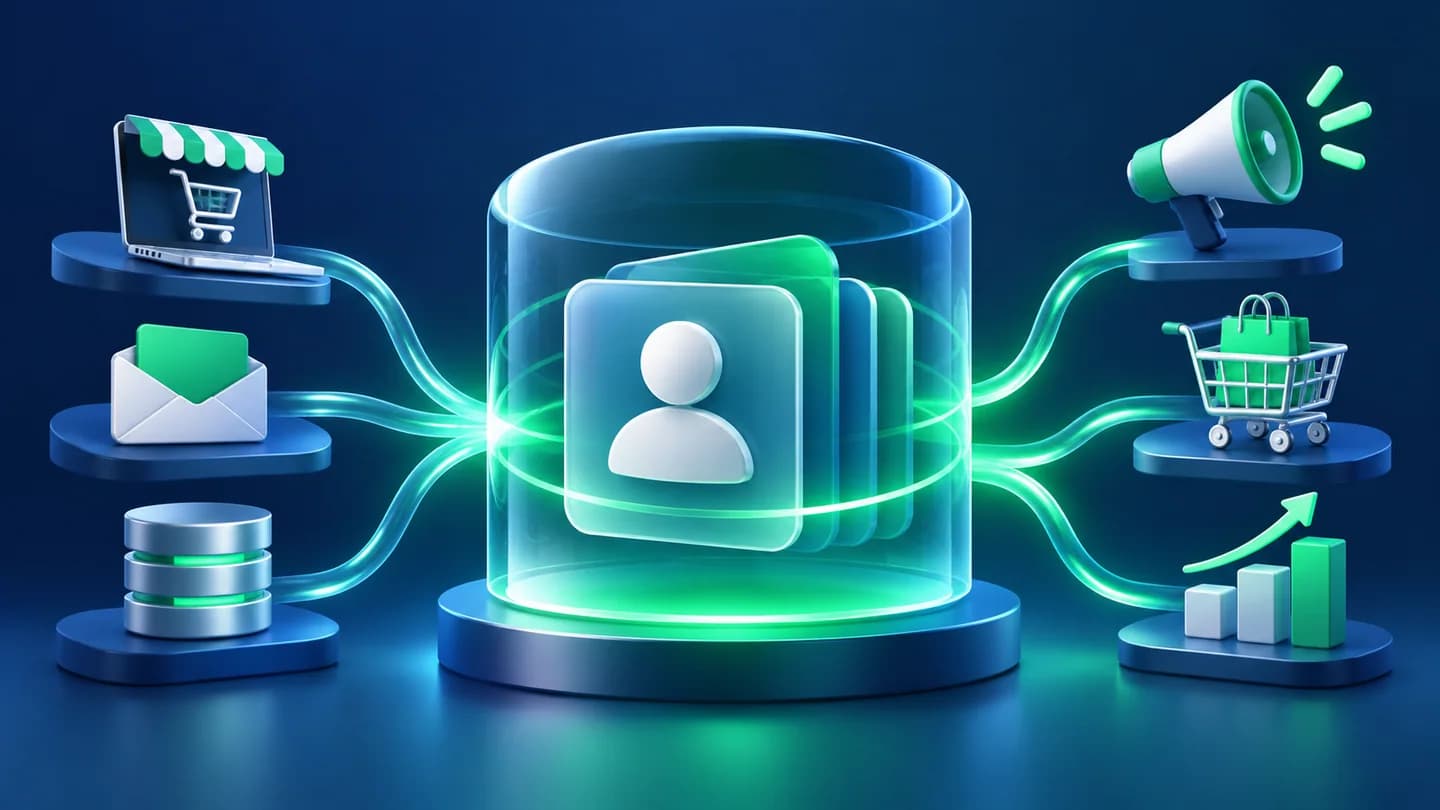
One Profile Per Customer. Every Data Source Included.
We design and implement Customer Data Platforms that stitch together behavioural, transactional, and demographic data into a single, persistent customer record. Clients gain a reliable foundation for personalisation, retention campaigns, and revenue forecasting.
 E-Commerce
One governed view of the customer
Profiles combine web, app, CRM and transaction data with each attribute traceable to its source.
Consent that travels with the data
Purpose-level consent is checked before profiles are used for a given channel, rather than handled separately in each tool.
Tool independence
Audiences are pushed to ad, email and messaging tools through connectors, so you can swap tools without rebuilding the data layer.
Customer Data Platform (CDP)
The outcome we're after
Most companies already hold customer data in five places: the website, the app, the CRM, the billing system and the support desk. The same person appears as different records in each, marketing audiences are built from stale exports, and nobody can say with confidence what a customer has consented to.
We design a CDP around three jobs: collect events reliably, resolve them to a single person without merging people who should stay separate, and deliver audiences to the tools that act on them. Identity resolution uses deterministic keys such as login ID, verified email and phone first, and treats probabilistic matches as suggestions rather than merges. Consent is stored with each profile and checked whenever data is read or sent out.
You own the pipeline, the profile store and the identity graph, so changing a marketing tool or warehouse does not mean losing your customer history.
What we deliver
Key offerings
Scope
What a custom customer data platform build includes
Event collection
Web, mobile and server-side SDKs or APIs with schema validation, deduplication and replay for failed deliveries.
Source connectors
Batch and streaming ingestion from CRM, billing, support and e-commerce systems into a common event model.
Identity resolution
Deterministic matching on stable identifiers, with merge and unmerge operations, a full lineage record and manual review for ambiguous cases.
Profile store and traits
Computed attributes such as last purchase, lifetime spend or product usage, recalculated as events arrive.
Consent and preference registry
Per-purpose, per-channel consent with timestamps and source, withdrawal handling and suppression lists enforced on every export.
Audience builder
Rule-based segments that can be previewed, scheduled and refreshed, with size estimates before activation.
Activation connectors
Delivery of audiences and events to email, WhatsApp, advertising platforms and your warehouse.
Engineering
Architecture and technology
Events enter a durable log first, so nothing is lost if a downstream system is slow, and are validated against registered schemas. A stream processor resolves identities and updates profiles; the identity graph keeps edges between identifiers with the evidence for each, which lets us split a wrongly merged profile later instead of losing information. A warehouse holds the full event history for analysis, while a low-latency profile store serves real-time lookups. Consent is evaluated at read time, so a withdrawal takes effect on the next export without waiting for a batch rebuild. Personal data fields can be tokenised, and deletion requests are propagated to every store through a single orchestrated job.
Typical stack
- Apache Kafka or Redpanda
- PostgreSQL
- ClickHouse or BigQuery
- Redis
- Node.js or Go
- dbt
- OpenAPI-defined collection API
- Docker and Kubernetes
Delivery
How we deliver it
- 01
Use cases and data inventory
We list the decisions the CDP must support, the sources holding data, and the identifiers that connect them.
- 02
Event model and ingestion
We define the event schema and build collection and the first source connectors, with data quality monitoring.
- 03
Identity and profiles
Matching rules are built, tested on real data and reviewed with you, since merge errors are costly to undo.
- 04
Consent and governance
Consent registry, access controls, lineage and deletion workflow are implemented and verified.
- 05
Audiences and activation
Audience builder and connectors are launched against one or two real campaigns before widening.
Planning
What drives cost and timeline
- Number and quality of source systems
- Event volume and need for real-time versus batch activation
- Identity complexity: anonymous traffic, shared devices, multiple IDs per person
- Number of activation destinations
- Consent and governance requirements, including regional data residency
- Data cleansing and historical backfill
India: compliance and market notes
- The DPDP Act 2023 requires consent, purpose limitation and the ability for individuals to withdraw consent or request erasure, all of which the registry and deletion workflow are designed to support.
- Children's data requires verifiable parental consent under the Act, so we flag or exclude profiles of known minors from profiling.
General information, not legal or tax advice.
Comparing ready-made options first? Read our guide to customer management software.
Why Splicity
Why teams choose us for this
A senior team, a fixed plan and long-term ownership — the things that decide whether a project actually succeeds.
One accountable team
Strategy, design, build and support handled end to end by senior people — not handed off and lost.
Fixed, transparent scope
A clear plan and estimate before any work begins. No open-ended billing, no surprises.
Built to scale & rank
Performance, security and SEO engineered in from day one — not bolted on at the end.
A long-term partner
We support, monitor and evolve what we build, so it keeps delivering value long after launch.
FAQ
Frequently asked questions
Do we own the CDP code and the profile data?
Yes. The pipeline, identity logic, schemas and all stored data are yours.
Can it connect to our existing CRM and marketing tools?
Yes. We use APIs, webhooks and warehouse syncs for the common tools and build custom connectors for others.
How is it hosted?
In your cloud account, using managed services where sensible. Choice of region follows your data residency policy.
When should we buy a packaged CDP, or just use a CRM?
If you have a few sources and simple segmentation, your CRM or a packaged CDP may be enough. Custom builds pay off when identity logic, data ownership, consent controls or cost at volume are the deciding factors.
How does this differ from a BI dashboard?
A CDP unifies and activates person-level data; a BI dashboard reports aggregated metrics. They often share a warehouse but serve different users.
How we build it
Related projects & blueprints
E-Commerce · Solution blueprint
Headless Commerce Replatform
How we move a slow, plugin-heavy online store to a headless architecture — a fast storefront on a modern commerce engine — while protecting existing search rankings, payment flows and operations.
Read the blueprint →
More in E-Commerce & Business Solutions
Related services
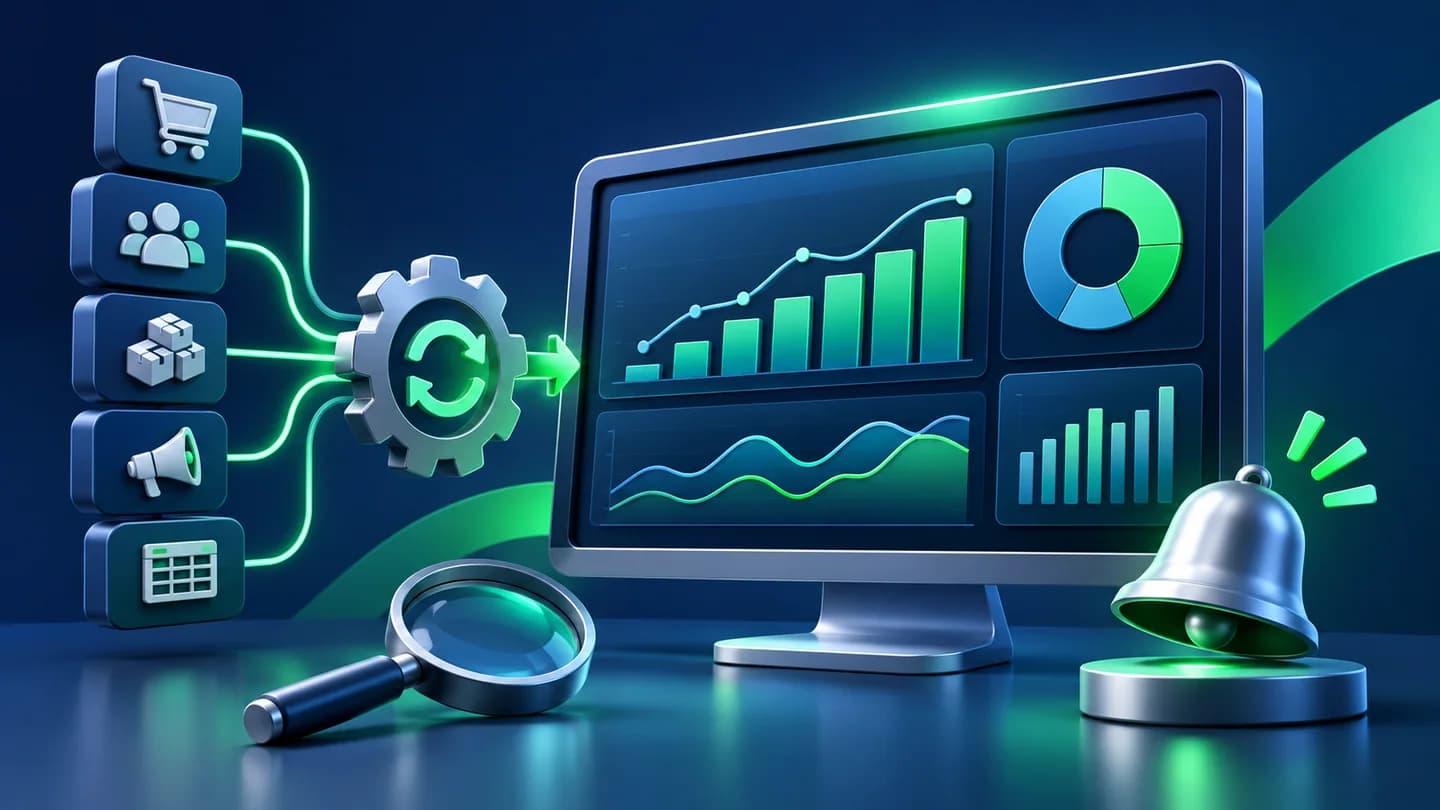
Business Intelligence (BI) Dashboard
We design and build Business Intelligence dashboards that consolidate your metrics into a single, live view tailored to your workflows. The result is a team that stops guessing and starts acting on facts.
Explore→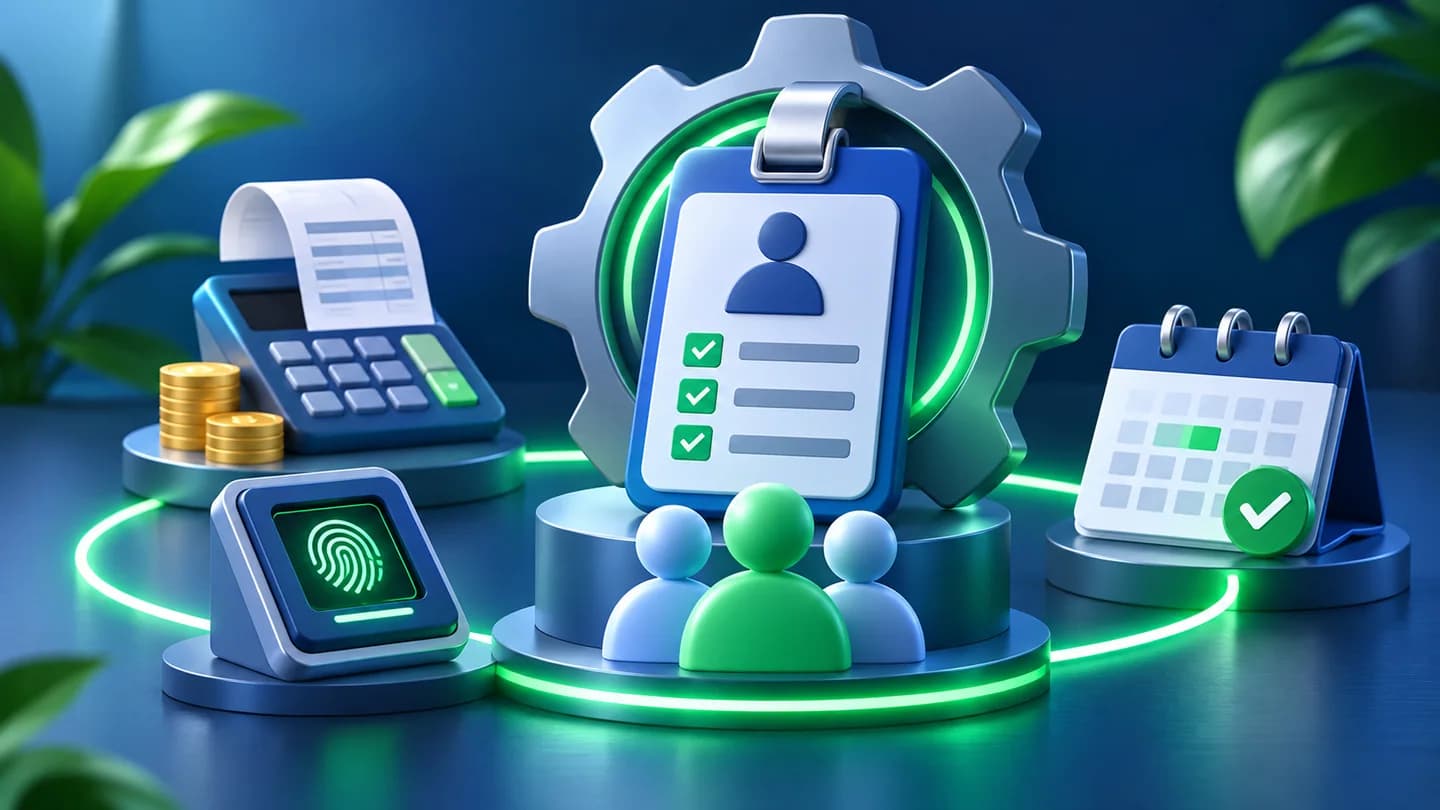
HR Management System (HRMS)
We build tailored HR management systems that handle payroll calculations, attendance tracking, and leave workflows in one unified platform. Clients gain accurate, audit-ready HR data and free their teams from repetitive manual tasks.
Explore→
Learning Management System (LMS)
Splicity designs and develops custom Learning Management Systems that make online training structured, trackable, and genuinely engaging. Clients walk away with a platform that reduces onboarding time, proves skill acquisition, and scales without friction.
Explore→
Document Management System (DMS)
Splicity designs and builds document management systems that give your business a single, organised place to store, retrieve, and route every file. The result is less time hunting for documents and more time acting on them.
Explore→
Appointment Booking System
We design and build appointment booking systems that connect your calendar, your team, and your clients in one seamless flow. The result is fewer no-shows, less back-and-forth, and more confirmed bookings every day.
Explore→
Real Estate Platform Development
Splicity designs and develops end-to-end real estate platforms — from searchable listing portals to broker CRM systems. Clients get a scalable, branded tool that brings buyers, sellers, and agents onto one efficient workflow.
Explore→Ready to start your customer data platform (cdp) project?
Tell us what you're building. We'll scope it and come back with a clear plan, timeline and estimate.